SALE
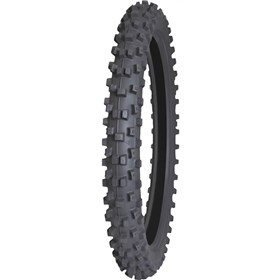
Dunlop
Dunlop Geomax AT81 Enduro Rear Tire
$145.95
$116.76
Browse our complete selection of premium aftermarket tires to keep your dirt bike competitive.
Dunlop
$145.95
$116.76
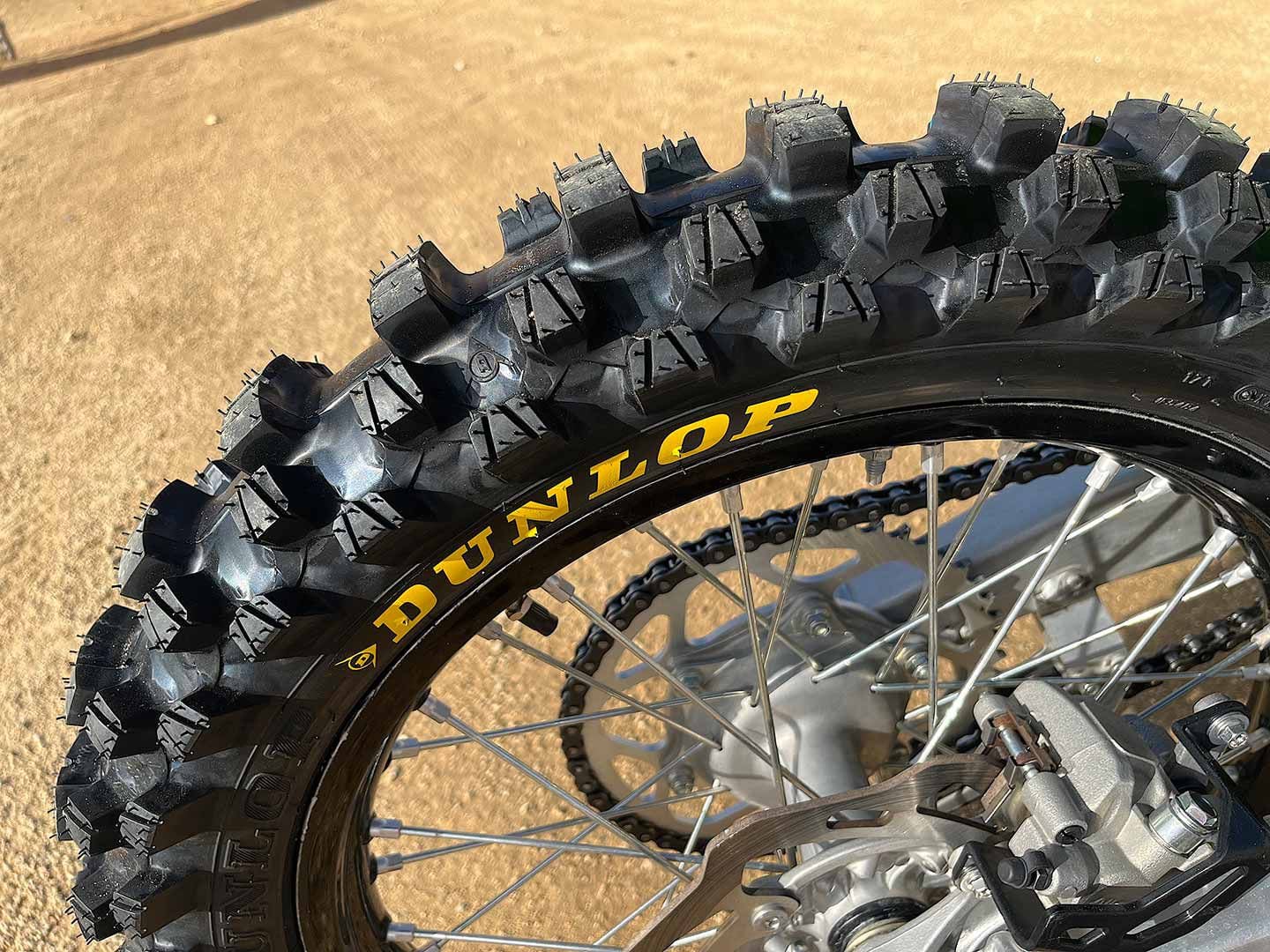
Dunlop
$139.95
$111.96
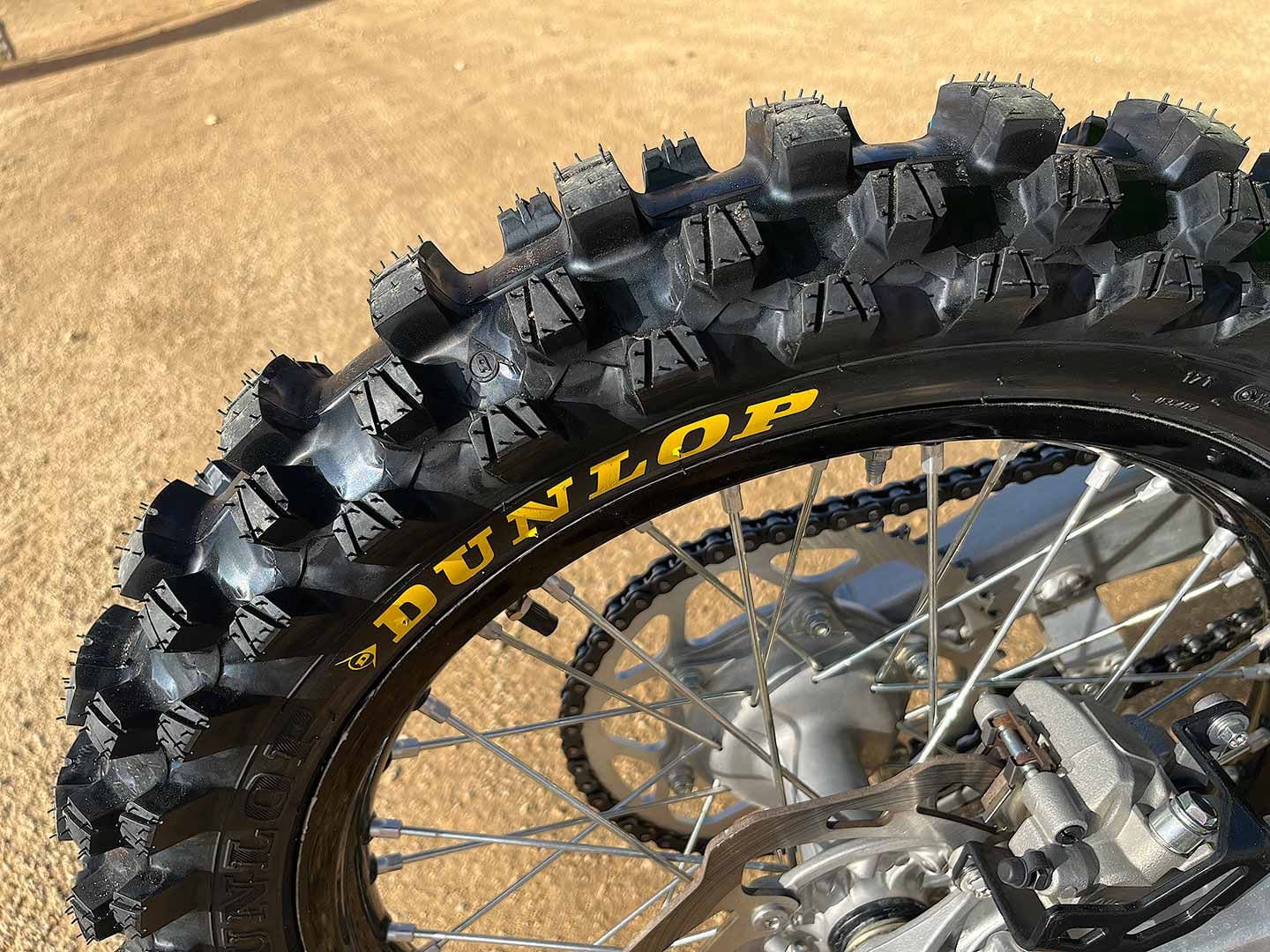
Dunlop
$169.95
$135.96
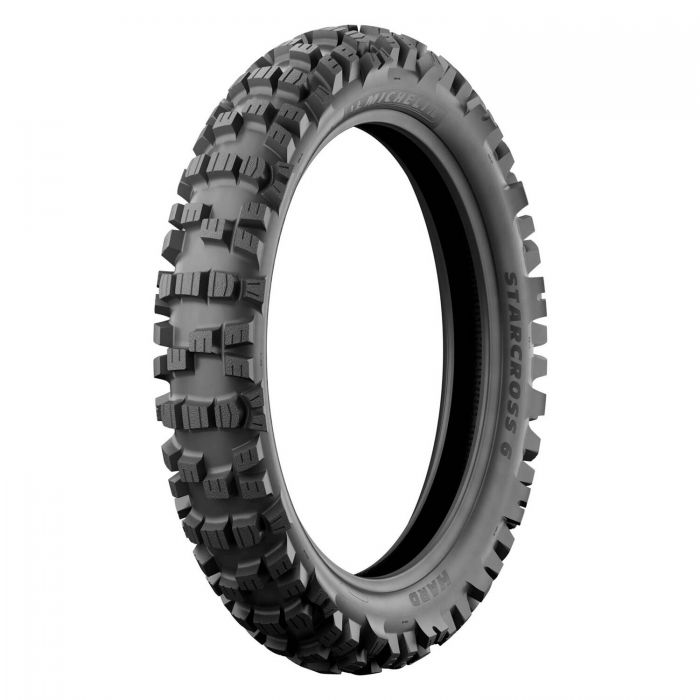
Michelin
$149.95
$119.96
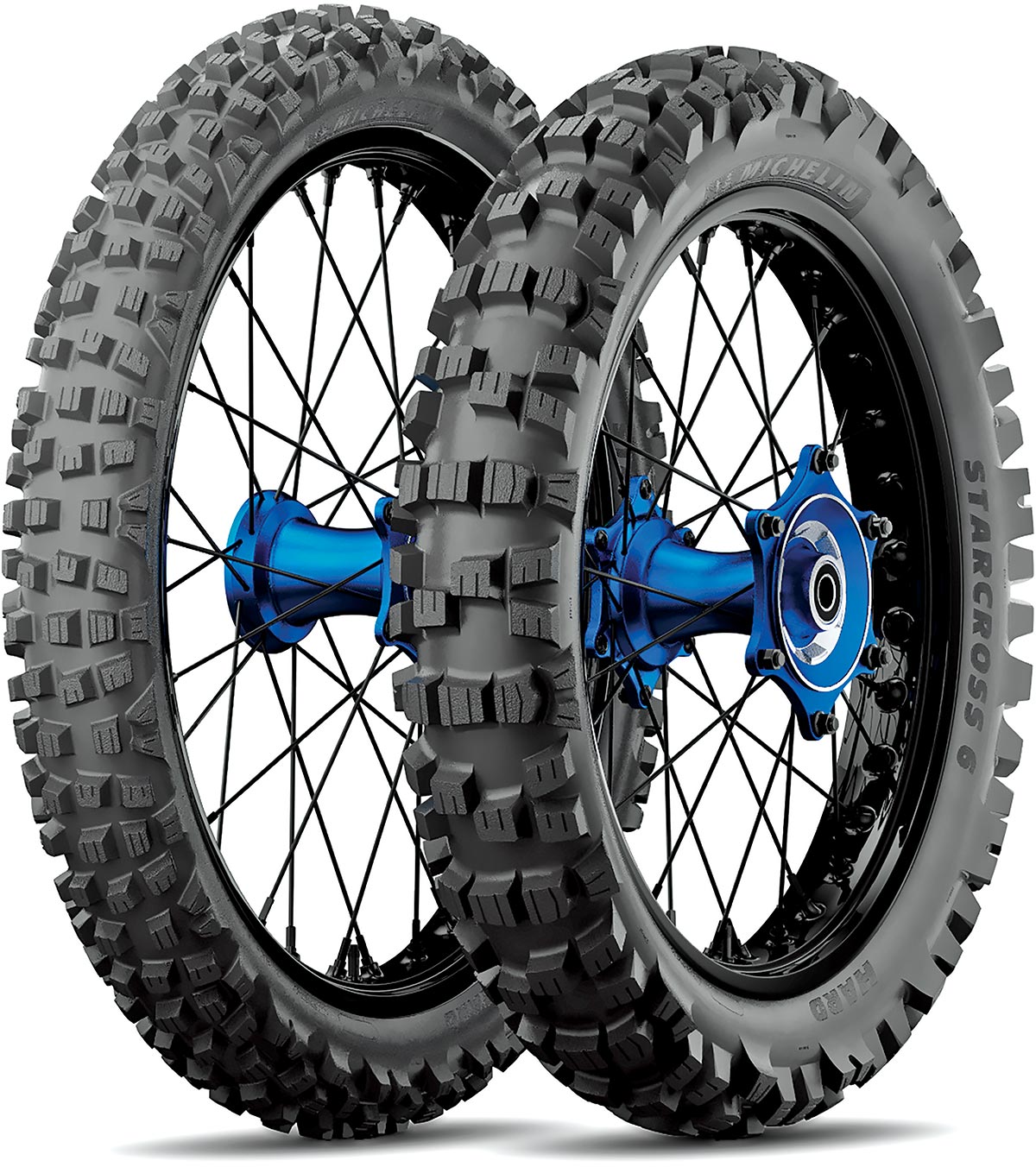
Michelin
$125.95
$100.76
### The Mechanical Role of Off-Road Tires & Wheel Assemblies Tires and wheel assemblies form the critical contact patch through which horsepower is transferred into forward acceleration, lateral cornering grip, and braking traction. In off-road and motocross racing, tires act as the initial stage of suspension damping. The carcass plies, sidewall height, and rubber compound flex dynamically over rocks, roots, and square-edge bumps. Selecting the correct tread block pattern and rubber compound ensures optimal ground penetration, prevents tread chunking, and provides predictable cornering feedback at extreme lean angles.
### Common Stock OEM Failure Modes & Material Vulnerabilities Factory showroom dirt bikes are frequently equipped with budget OEM tires and thin inner tubes designed to minimize factory production expenses: 1. Pinch Flats on Thin OEM Tubes: Standard production tubes feature paper-thin 1.2mm rubber walls. Under low operating pressures (11-13 PSI), hitting a square-edge rock pinches the tube against the rim bead, causing instant deflation. 2. Knob Tearing & Chunking in Intermediate Terrain: Cheap rubber formulations lack high-tensile molecular binders. When ridden aggressively on hard-pack or rocky ground, tread blocks tear off at the base. 3. Rim Cracking & Loose Spokes: Mass-production cast hubs and soft aluminum rims easily flat-spot or crack on hard jump landings when spoke tension is neglected.
### Tire Installation & Pressure Setup Guidance Inspect the rim interior for sharp spoke nipples and replace worn rim tape. Coat the inner tube or Bib Mousse generously with talcum powder or silicone mousse gel. Insert the tube into the tire with 3 PSI of air to prevent tube pinching. Mount the first bead over the rim, line up the valve stem and rim lock, and lever the second bead into place using smooth, curved tire irons. Inflate to 32 PSI to pop both beads onto the rim safety humps, then adjust down to operating pressure (12.5-13.5 PSI for MX; 11.0-12.5 PSI for woods). Torque rim lock nut to 14-16 Nm.
A: 19-inch rear wheels have shorter, stiffer sidewalls that reduce tire roll in high-speed motocross corners. 18-inch rear wheels have taller sidewalls that absorb trail rocks and resist pinch flats in off-road enduro terrain.
A: A loose rim lock allows the tire bead to slip around the aluminum rim under heavy braking or acceleration, dragging the inner tube and shearing the valve stem.
A: A worn Bib Mousse shrinks in volume and feels excessively soft (simulating less than 10 PSI), allowing the tire carcass to roll excessively in turns.