SALE
AS3 Performance
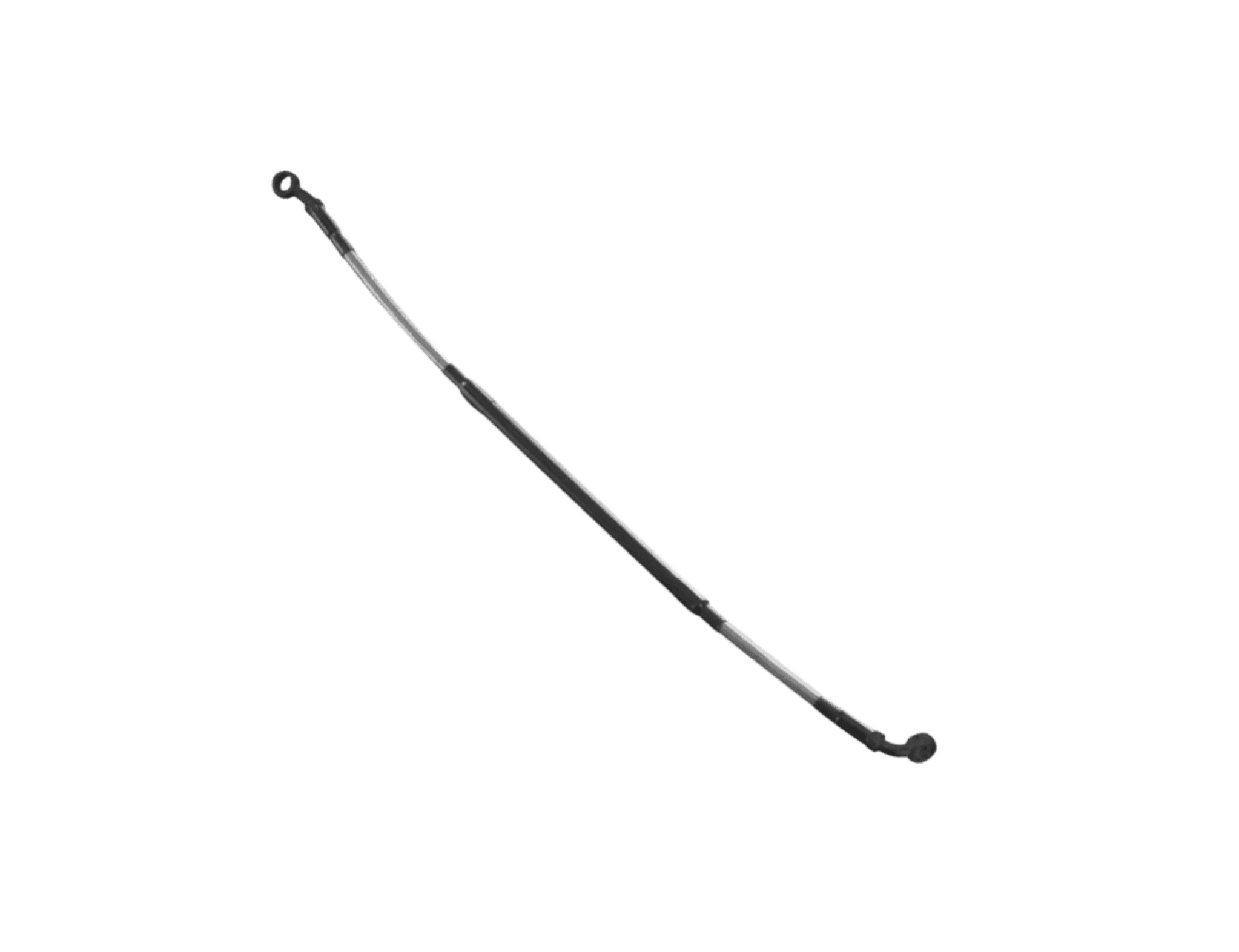
AS3 Performance Braided Brake Lines
$65.00
$52.00
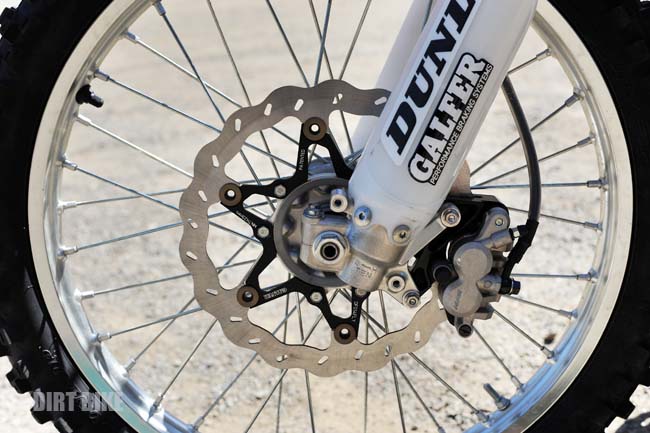
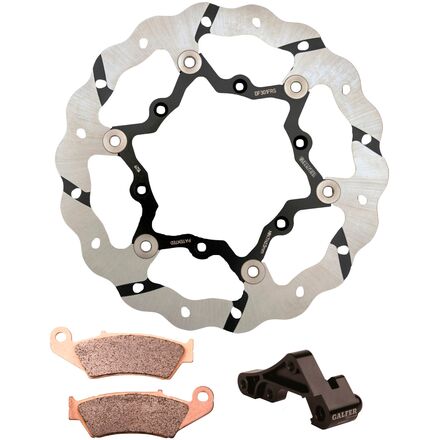
Browse our complete selection of premium aftermarket braking to keep your dirt bike competitive.
### The Physics of Stopping Power & Hydraulic Heat Dissipation The braking system on a modern competition off-road motorcycle converts kinetic motion into thermal energy through hydraulic pressure and friction. As a 240-pound motorcycle carrying a geared rider decelerates from 50 mph into a rutted corner, the front and rear braking systems generate intense friction temperatures exceeding 1,000°F (540°C) at the rotor-pad interface. In racing conditions, braking performance is not merely about maximum clamping force—it is about thermal stability, hydraulic stiffness, and progressive lever modulation. A rider who has absolute confidence in their front brake can charge deeper into turns, brake later, settle the front suspension smoothly, and maintain higher corner speed.
### Common Stock OEM Failure Modes & Material Vulnerabilities Factory production braking systems are compromised by mass-manufacturing costs and standard rubber materials: 1. Volumetric Expansion of Rubber Brake Hoses: Standard OEM rubber brake hoses expand radially under high hydraulic pressure, particularly when brake fluid temperatures rise during heavy downhill braking. This volumetric expansion dissipates master cylinder pressure, resulting in a spongy, vague lever feel and severe brake fade. 2. Thermal Distortion & Rotor Warping: Solid round OEM stamped rotors have limited cooling surface area and trap heat, friction gases, and pad glaze. Under sustained heavy braking, localized hot spots develop, causing the rotor blade to warp and induce lever pulsing. 3. Brake Fluid Boiling & Vapor Lock: Standard DOT 3 or degraded glycol brake fluid boils when subjected to extreme caliper heat, generating compressible vapor bubbles that cause instantaneous loss of hydraulic brake pressure. 4. Pad Glazing in Muddy Conditions: Stock organic or basic semi-metallic pads quickly develop a hardened, mirror-like glaze when contaminated with wet clay and slurry, drastically reducing friction coefficients.
### Step-by-Step Installation, Bleeding & Bed-In Protocols <div class="my-6 p-4 rounded-xl border bg-red-500/20 text-red-400 border-red-500/40 bg-opacity-30"><div class="flex items-center gap-2 font-black uppercase text-sm mb-1 tracking-wider"><svg class="w-5 h-5 flex-shrink-0" fill="none" stroke="currentColor" viewBox="0 0 24 24"><path stroke-linecap="round" stroke-linejoin="round" stroke-width="2" d="M12 9v2m0 4h.01m-6.938 4h13.856c1.54 0 2.502-1.667 1.732-3L13.732 4c-.77-1.333-2.694-1.333-3.464 0L3.34 16c-.77 1.333.192 3 1.732 3z"></path></svg>Safety & Precision Warning</div><p class="text-sm text-gray-300 leading-relaxed">Safety & Installation Notice: Hydraulic brakes are life-critical safety systems. Ensure all banjo bolts are torqued to 18-20 Nm using new copper crush washers. Torque rotor bolts in a star pattern to 14-16 Nm using medium-strength blue thread locker. Bleed the system thoroughly with a vacuum bleeder or pump-and-hold method until zero air bubbles remain and lever feel is rock-solid.</p></div> Brake Pad & Rotor Bed-In Procedure: Perform 10 to 15 progressive moderate stops from approximately 30 mph down to 5 mph, allowing brief cooling intervals between stops. This transfers an even, microscopic friction transfer layer from the brake pad onto the rotor face, preventing pad glazing and ensuring maximum stopping power.
A: Moving the brake caliper further outward from the axle centerline creates a longer mechanical lever arm, generating substantially higher braking torque over the spinning wheel with less required finger force at the lever.
A: Stainless steel braided lines eliminate radial hose ballooning under pressure, ensuring that 100% of the hydraulic pressure generated by your hand at the master cylinder is transmitted directly into clamping the caliper pistons.
A: No! DOT 5 silicone fluid is incompatible with standard off-road motorcycle brake systems. It destroys glycol-compatible rubber seals and boils unpredictably. Always use DOT 4 or DOT 5.1 glycol-based brake fluid.
A: Measure the rotor thickness at multiple points using a vernier caliper or micrometer. If the blade thickness is below the minimum limit stamped on the rotor face (typically 2.5mm for front rotors and 3.5mm for rear rotors), replace the rotor immediately.